
When considering the purchase price of solar panels in India, most homeowners will favour saving money here than on the total electrical system cost.
Polycrystalline solar panels will generally be cheaper on a per watt basis, which is why many homeowners are drawn to these types of panels if they have limited budgets.
While the cost of a monocrystalline panel will be greater initially, if you are limited on the amount of roof space you have available for installation, you can usually expect greater energy production and superior long-term value.
The additional cost of a monocrystalline panel will often be negated by the higher energy yield and greater long-term value as compared to polycrystalline panels.
Performance in Indian Climate
Given the climate variation in India (very hot summers, monsoon rainfall and fluctuating sun) the performance of solar panels should be a primary concern for homeowners. Scientific evidence suggests that monocrystalline solar panels will generally outperform polycrystalline solar panels in very high heat or low-light conditions.
Polycrystalline panels will still be able to produce energy well on sunny days, but will generally lose efficiencies as temperature increases compared to monocrystalline panels; however, both types are highly durable and both types have similar temperature performance characteristics with monocrystalline panels performing slightly better in terms of temperature coefficient.
Aesthetic Considerations & Roof Space Utilization
If you live in a place like Kochi or any other Indian city, aesthetics may be important to your decision-making process as a homeowner.
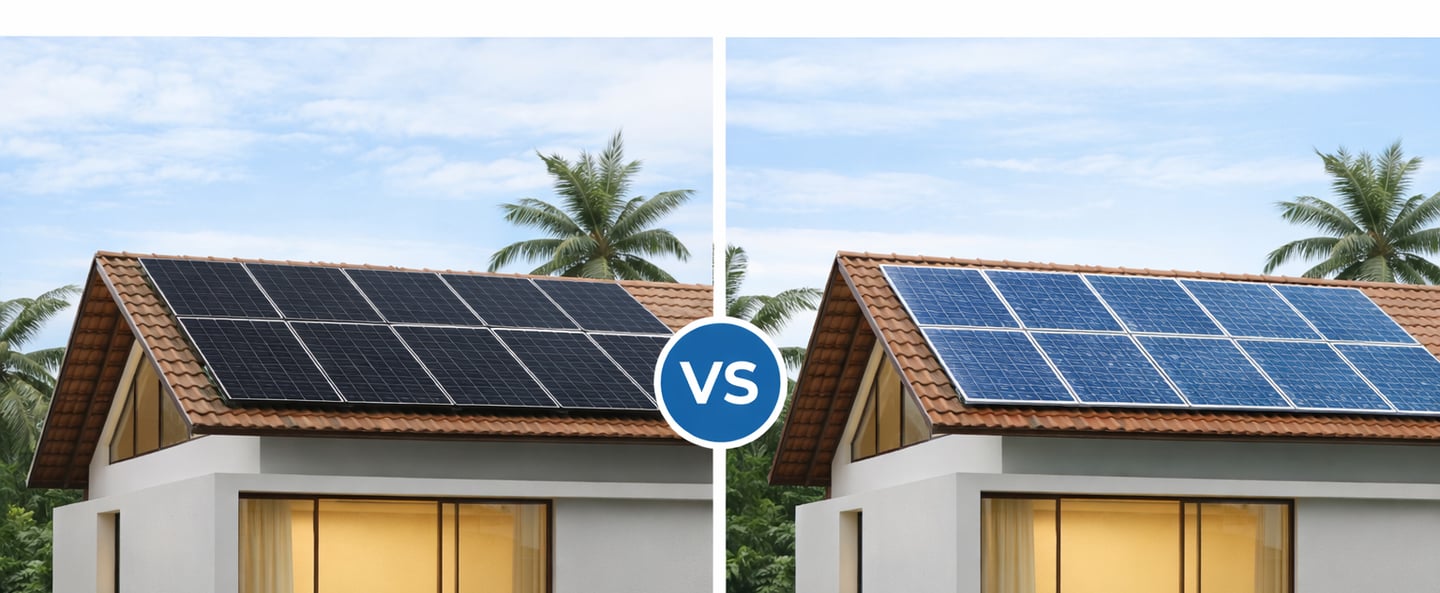
Monocrystalline panel designs are well suited to modern-day homes because of their sleek and solid dark coloring.
Polycrystalline panels may not fit well within the architectural features of your home so it might be best to avoid using these types of solar systems.
Another advantage of monocrystalline systems versus polycrystalline is that they produce more electricity while using less space. This is an important factor for homeowners with limited roof areas.
Which Type of Solar Panel Will Work Best For Your Home?
Here are some guidelines to help make your decision:
✔ Use monocrystalline panels if:
You want the most efficient use of energy.
Your roof space is restricted.
Gazing at your electricity meter and seeing monthly savings long-term is essential.
✔ Use polycrystalline panels if working with cost as your primary concern:
Upfront savings are your top priority.
Space for a large array (more than 60 square meters) is available.
Performance of the system vs the cost are equal (meaning they produce the same amount of electricity for the same amount of money).
Both types of solar panels have advantages and disadvantages when installing residential solar systems in India. It is recommended that the decision made reflects the amount of money available, size of roof, location, and goals on future uses of electricity.
Work with Radeus Power Solutions to Get More from Your system
At Radeus Power Solutions we will help you every step of the way from choosing the correct solar panel for your home all the way down to installation of your system. We will also educate you about differences between monocrystalline and polycrystalline panels and how to design a system that maximizes your savings, efficiency, and long-term use of solar energy!
Whether you’re in Kochi, or elsewhere in India, our expert solar consultants and services will help you choose the right solar panel setup for your home’s needs.
Ready to switch to solar? Contact us for a free site assessment and customised quote today.